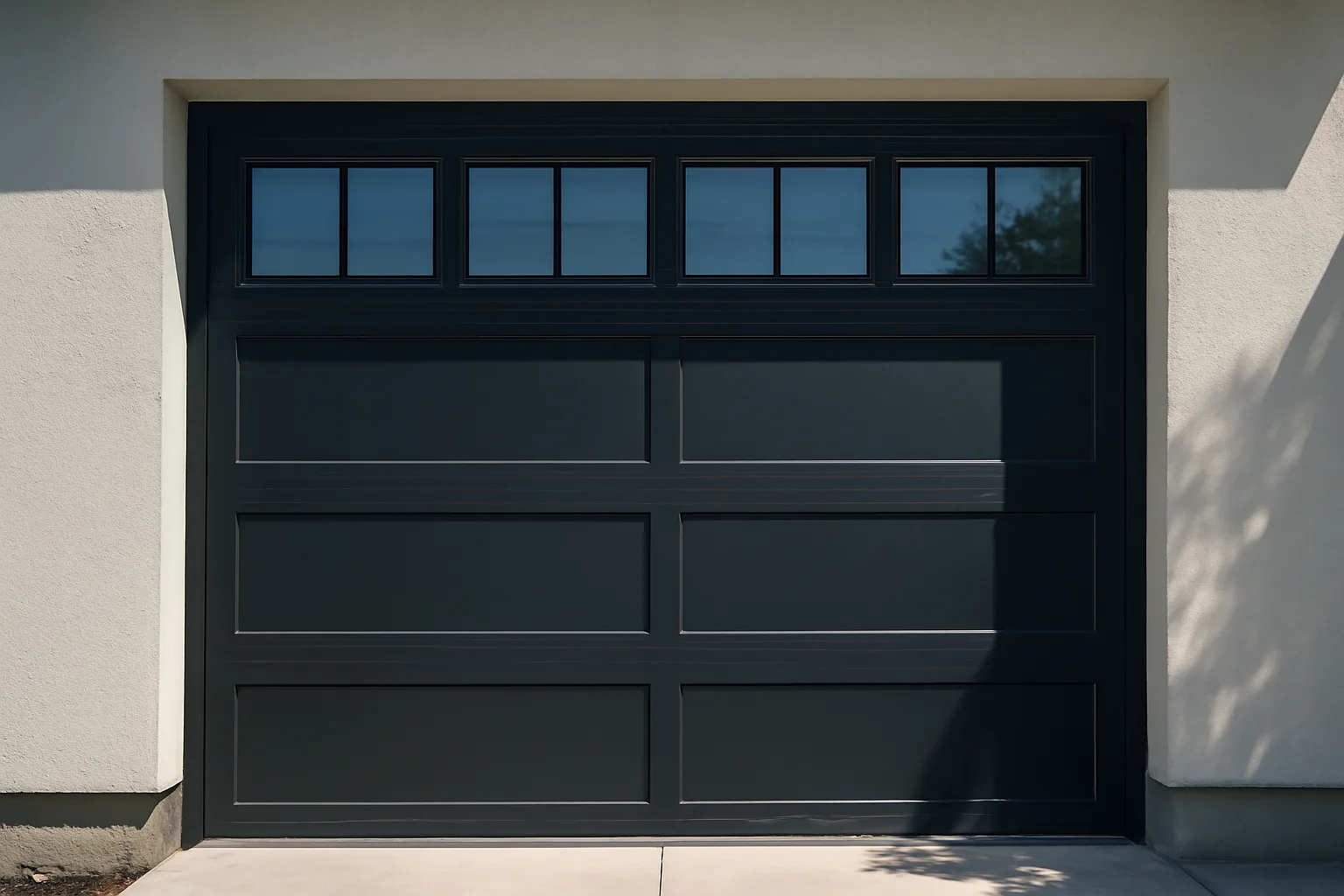
What upkeep does a garage door need?
Keep loose objects out of the garage opening and use the supplied care model instructions. Arrange door inspection for new mechanical resistance.
Keeping a moving door usable includes watching how it moves. The aim is to notice developing faults, without touching counterbalance spring fittings. The product's own operating directions should guide owner maintenance. That guidance defines the checks suitable to the hardware.
Arrange help for new operating trouble
Tell us where the service is needed and whether it is shut. Mention any impact or obstruction. You review the estimate before approving repairs. Discuss the maintenance concern on (475) 288-9473.
Let the technician assessing it assess uncertain balance
The manual explains the proper safety tests. Do not substitute a casual operating check. If the mechanism is visibly defective, do not release it for a balance test. Have the counterbalance arrangement inspected first.
A guide rail and a lifting support cable have different roles
Rails determine where the guide rollers travel. Lift wires transmit the counterbalance. When a lifting wire rope leaves its seating, the guide rollers may carry an abnormal lifting load. That is why an observable rail symptom requires a lifting examination. Both sides need a suitable lifting load path with guide alignment reviewed separately.
Start with loose obstructions
Move loose objects out of the panel path. Equipment left near the lower rail could interfere with a running roller. Use the sensor maker's suitable cleaning procedure. Do not alter the sensor wiring.
A schedule should match the installed equipment
A model may specify exact owner checks. Follow the care intervals in the supplied model instructions. A sealed component may have different care specifications. When the appropriate care procedure is unclear, review the equipment details before applying products. Routine care does not remove the need to diagnose a fault.
Do not turn every alignment hardware problem into full replacement
The affected installed part may be a rail, roller or mounting point. The hardware examination needs to locate the particular damage. A worn guide wheel may be unsuitable. The rest of the complete arrangement calls for a current condition check. Clarify why each mechanical part is included. You may review the work against actual current condition.
Keep door inspection at a sensible distance
Look for new dents or separation at panel joints. Stop powered use if the current door hangs crookedly. Changed operating noise could be a useful warning. Note whether the symptom occurs opening or closing. That description is more useful than a guessed component name.
Keep product choice exact
The proper care depends on the fitted hardware. Apply products only where the product directions permit. Do not put lubricant on safety-eye lenses. Grease cannot correct a failed lifting coil spring. Do not hide repeated binding with more product.
Keep useful observations for the service call
If you already noticed where scraping occurred, explain that point without operating the garage door again. Different guide components can cause comparable rubbing. A direct inspection needs to distinguish those causes. Do not bend adjacent brackets to make the moving panels appear level. An appropriate repair accounts for both travel alignment and support.
Bring a specific observation to the visit
Simple observations help more than a guessed component diagnosis. Write down which movement produced the sound. Include whether the lower edge remained even. Stop the observation if further use would involve damaged support. No care timetable establishes exactly how much life remains in a spring. Take that description into the service request.
If you would rather have a technician look at it, start with garage door opener repair.
Further reading: LiftMaster's owner manuals.